
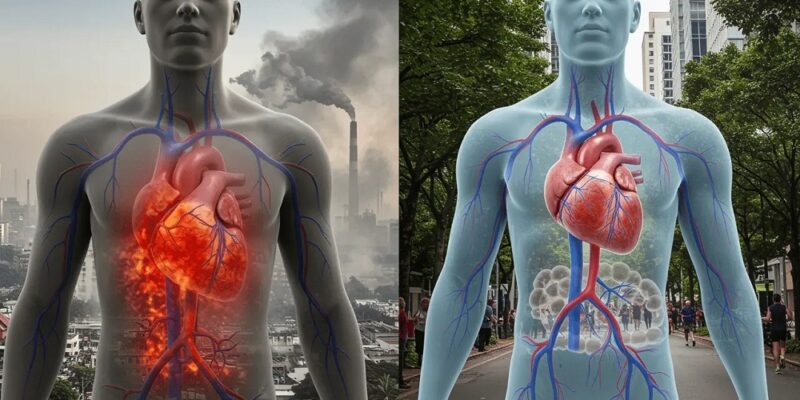
 By Isaac Axel
The air we breathe is a fundamental determinant of systemic wellness, yet it remains one of the most widespread environmental vectors of disease. For generations, air pollution was broadly viewed as a localized, superficial issue, primarily associated with visible urban smog or industrial soot. However, modern epidemiological data and medical research have revealed a far more dangerous reality. Air quality directly influences cellular mechanics, cardiovascular function, and respiratory efficiency.
The human body is constantly exposed to ambient atmospheres, processing thousands of gallons of air daily. When this air is contaminated with microscopic particulate matter and toxic gaseous compounds, the physiological consequences extend far beyond simple coughing or watery eyes. Poor air quality triggers complex systemic inflammatory responses that accelerate chronic illnesses and contribute to premature mortality worldwide. Understanding the relationship between atmospheric pollutants and internal biological systems is crucial for navigating modern environmental health challenges.
Understanding the Primary Pollutants
To comprehend the physiological damage caused by degraded air, it is essential to isolate the specific agents responsible for environmental toxicity. Ambient pollution is not a singular entity but a complex mixture of microscopic solids, liquid droplets, and invisible gases.
Particulate Matter (PM)
Particulate matter is classified primarily by aerodynamic diameter, which dictates how deeply the particles can penetrate the human respiratory tract.
-
PM10: These coarse particles have a diameter of ten micrometers or less. They typically originate from crushing or grinding operations, agricultural dust, and road construction. While the upper respiratory tract can filter some PM10, these particles still reach the primary bronchial tubes, causing localized irritation.
-
PM2.5: Fine particulate matter measures 2.5 micrometers or less in diameter, roughly thirty times smaller than the width of a single human hair. Sourced from combustion processes, vehicle emissions, power plants, and wildfires, PM2.5 bypasses the body’s natural filtration defense mechanisms entirely. These particles travel deep into the alveolar sacs of the lungs, where the gas exchange occurs.
Gaseous Contaminants
Alongside particulate matter, several gaseous compounds compromise cardiopulmonary integrity. Ground-level ozone is formed when nitrogen oxides and volatile organic compounds react chemically in the presence of sunlight. Unlike the protective stratospheric ozone layer, ground-level ozone acts as a powerful chemical irritant. Additionally, nitrogen dioxide from automobile exhaust and sulfur dioxide from industrial coal combustion present severe hazards to biological tissues.
The Biological Mechanisms of Damage
The transition from breathing polluted air to developing clinical respiratory or cardiovascular disease involves specific cellular and biochemical pathways. The body does not merely tolerate these foreign agents; it treats them as systemic threats.
When fine particulate matter or reactive gases enter the lungs, they interact directly with epithelial cells and alveolar macrophages. This interaction generates massive quantities of reactive oxygen species, initiating a state of localized oxidative stress. As cellular structures suffer damage, the immune system initiates a powerful inflammatory cascade.
The lungs release pro-inflammatory signaling proteins, known as cytokines, into the bloodstream. This localized pulmonary inflammation rapidly shifts into a systemic, body-wide inflammatory response. As these inflammatory markers circulate through the vascular network, they alter blood vessel elasticity, damage endothelial linings, and disturb the autonomic nervous system, setting the stage for concurrent organ dysfunction.
The Destructive Impact on Respiratory Health
The respiratory system bears the immediate brunt of poor air quality. Because the lungs act as the point of entry, they absorb the highest concentration of environmental toxins.
Aggravation of Asthma and COPD
For individuals living with pre-existing respiratory conditions such as asthma or Chronic Obstructive Pulmonary Disease, poor air quality acts as an immediate trigger for acute exacerbations. Ground-level ozone and particulate matter strip away the protective fluid layer lining the airways, causing hyper-reactivity. The bronchial smooth muscles constrict violently, producing symptoms of wheezing, chest tightness, and severe shortness of breath. Prolonged exposure leads to a permanent decline in lung function, accelerating the progression of tissue degradation.
Pathological Remodeling and Infections
Chronic exposure to polluted air impairs the function of cilia, the microscopic hair-like structures responsible for sweeping mucus, bacteria, and debris out of the respiratory tract. When cilia are paralyzed or destroyed by pollutants, the lungs lose their ability to self-cleanse. This stagnation allows pathogens to colonize the respiratory tissue easily, resulting in higher rates of acute bronchitis and pneumonia. Over time, the constant cycle of tissue damage and inflammation induces structural remodeling of the airways, characterized by fibrotic scarring and reduced pulmonary compliance.
The Silent Threat to Cardiovascular Health
While the connection between air pollution and lung disease seems intuitive, the impact of poor air quality on the cardiovascular system is arguably more lethal. Epidemiological studies demonstrate that a significant percentage of pollution-related fatalities are attributable to cardiovascular events rather than respiratory failure.
Endothelial Dysfunction and Atherosclerosis
Systemic inflammation triggered by PM2.5 directly impairs endothelial function, which is the ability of blood vessels to dilate and constrict naturally to regulate blood pressure. The presence of circulating inflammatory cytokines promotes the oxidation of low-density lipoprotein cholesterol within the arterial walls. This oxidation accelerates the formation of fatty atherosclerotic plaques.
Furthermore, ultra-fine particles can physically cross the alveolar-capillary membrane, entering the bloodstream directly. Once inside the vasculature, these particles interact with plaque formations, rendering them highly unstable and prone to rupture.
Thrombosis and Acute Coronary Events
When an unstable arterial plaque ruptures due to pollution-induced vascular stress, it triggers an immediate clotting cascade. Air pollution increases blood viscosity and elevates platelet aggregation, making the blood inherently thicker and more prone to clotting. This state of hypercoagulability significantly raises the risk of thrombus formation. If a clot blocks a coronary artery, it causes an acute myocardial infarction, commonly known as a heart attack. If it obstructs a cerebral artery, it causes an ischemic stroke.
Autonomic Dysregulation and Arrhythmias
Toxins in the air stimulate pulmonary neural receptors, sending aberrant signals to the central nervous system. This stimulation disrupts the delicate balance of the autonomic nervous system, causing a sharp increase in sympathetic drive, commonly known as the fight-or-flight response. The heart rate accelerates, peripheral blood vessels constrict, and blood pressure spikes. This neurological disruption also diminishes heart rate variability, making the heart muscle highly susceptible to dangerous ventricular arrhythmias, which can precipitate sudden cardiac arrest in vulnerable populations.
Long-Term Health Implications and Vulnerable Populations
The consequences of breathing compromised air accumulate over decades, influencing long-term public health trends and lifespan expectations.
Chronic Illness and Lifespan Reduction
Long-term exposure to ambient air pollution is linked to the development of chronic hypertension, metabolic syndrome, and lung cancer. The World Health Organization classifies outdoor air pollution as a definitive Class 1 carcinogen. Microscopic particles trapped deep within tissue structures cause persistent DNA mutations, disrupting regular cellular replication cycles.
High-Risk Groups
Certain segments of the population exhibit heightened vulnerability to environmental toxins.
-
Pediatric Populations: Children breathe more rapidly than adults relative to their body weight, meaning they inhale a proportionally larger dose of pollutants. Because their respiratory and immune systems are still developing, exposure can permanently stunt lung growth and cause early-onset asthma.
-
The Elderly: Aging individuals frequently present with diminished physiological reserves and underlying, subclinical cardiovascular disease, making them less capable of buffering pollution-induced oxidative stress.
-
Socioeconomically Disadvantaged Communities: These populations often reside closer to high-traffic corridors, industrial zones, and commercial freight hubs, resulting in disproportionately high, continuous exposure to poor air.
Frequently Asked Questions
Can indoor air quality pose the same level of risk to heart and lung health as outdoor pollution?
Yes, indoor air quality can sometimes be worse than outdoor air due to a lack of ventilation. Contaminants such as volatile organic compounds from household cleaners, radon gas, mold spores, carbon monoxide, and particulate matter from indoor cooking or wood-burning stoves can accumulate to hazardous levels, causing identical inflammatory and respiratory risks.
How do high-efficiency particulate air filters protect cardiopulmonary health?
High-efficiency particulate air filters utilize a dense, randomly arranged mat of fiberglass fibers to trap microscopic particles. They are rated to capture at least 99.97 percent of particles that are 0.3 micrometers in diameter, effectively removing PM2.5, allergens, and airborne pathogens from indoor environments, which reduces systemic oxidative stress.
What is the relationship between air pollution levels and the occurrence of strokes?
Air pollution acts as a direct trigger for ischemic stroke by promoting systemic inflammation, increasing arterial blood pressure, and causing endothelial dysfunction. These conditions lead to the sudden rupture of carotid artery plaques or the formation of blood clots that travel to the brain, cutting off vital oxygen delivery to cerebral tissues.
How does weather, such as a thermal inversion, affect localized air quality and health?
A thermal inversion occurs when a layer of warm air traps cooler air close to the ground, preventing atmospheric mixing. This phenomenon locks industrial emissions and vehicular exhaust near the surface, rapidly elevating the local concentration of PM2.5 and toxic gases, which typically causes a surge in emergency room admissions for respiratory crises.
Does short-term exposure to heavy pollution cause permanent damage to a healthy adult?
Short-term exposure to heavy pollution, such as walking through intense wildfire smoke, causes acute respiratory inflammation, coughing, and reduced lung capacity in healthy adults, which usually resolves once clean air is restored. However, for individuals with undetected cardiovascular weaknesses, even brief spikes can trigger sudden, severe events like arrhythmias.
How can athletes safely manage their training routines when ambient air quality is poor?
When air quality indexes indicate unhealthy levels, athletes should transition their workouts indoors to environments with filtered air. Exercising increases the respiration rate and shifts breathing from the nose to the mouth, bypassing the nasal filtration system and allowing a much larger volume of pollutants to travel deep into the lung tissue.